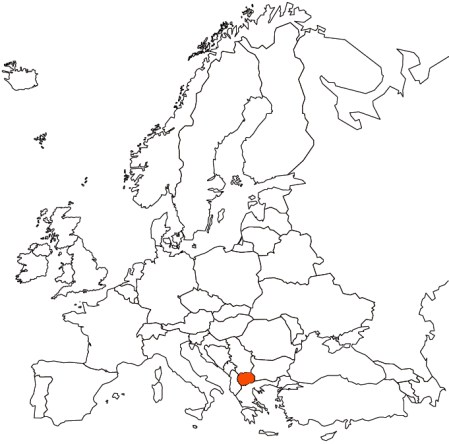
 Location: Southern Europe
Population: 2 million
Capital: Skopje
Geography: A landlocked, very mountainous nation
Language: Macedonian
Signature flavours: Pork, beans, freshwater fish, dairy, quince, berries, potatoes, bread, peppers
The Menu
Eric didn’t know much about North Macedonia, except that the country was part of former Yugoslavia, and that its name changed recently (to include “North”) due to a conflict over nomenclature with Greece. In starting his research, Eric imagined North Macedonian fare would be a mix of Slavic food and Greek, and found it leans more toward Slavic culinary traditions than Mediterranean.

Slatko od Dunja: In keeping with an old North Macedonian custom, we started our experience with a jam made from quince, topped with walnuts, and a glass of water.
Prep and cooking time: 90 min
Difficulty: 2/5
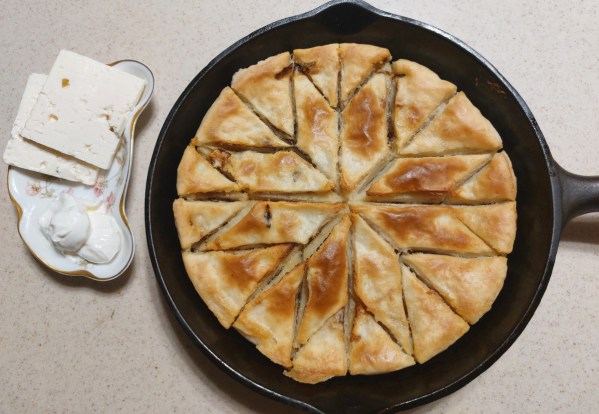
Gjomleze: A buttery layered bread made by repeatedly scooping batter into crepe-like layers. It is commonly served alongside cheese and sour cream.
Prep and cooking time: 60 min
Difficulty: 3/5

Tavče Gravče: The national dish of North Macedonia, tavče gravče is a hearty bean and paprika stew, sometimes containing sausage and hot peppers.
Prep and cooking time: 3 hours
Difficulty: 2/5

Stuffed Ohrid Trout: North Macedonia is landlocked, but Lake Ohrid in the south west is a source of freshwater fish. This dish features a whole trout stuffed with cheese, egg, spinach, and sour cream.
Prep and cooking time: 30 min
Difficulty: 2/5
The Shopping List
Eric struggled to find dried peppers, so we bought them fresh and dried them ourselves. None of his other ingredients posed a challenge to find — not even the quinces which are seldom eaten in rural Ontario — and he was able to source everything from our local supermarket and bulk store. The Lake Ohrid trout, a specific subspecies, was naturally not available here, so he opted for a Lake Huron trout.

The Meal
We started our meal with slatko od dunja. This tradition, used to welcome guests into one’s home, is said to make the visit sweet and the conversation clear and flowing.
Eric had called me into the kitchen to help with the gjomleze, so that particular item was not a surprise. It had proven fun and challenging to make — pouring a thin layer of batter onto the hot pan, waiting for the crepe to cook, then buttering it before pouring on another spoonful of batter. We repeated this eight or ten times before cutting the bread in its traditional pattern and baking it until the top was golden. The result was like a bready, buttery pancake, and we both really liked it (although the Canadian in me craved maple syrup to go with it).


Tavče gravče was a simple crowd-pleaser, and the beautiful peppers that had spent weeks drying in our kitchen finished the dish off with a pop of deep red.
The trout was incredible: melt-in-your-mouth, fall-off-the-bone, with its rich and creamy stuffing of mild white cheese, egg yolk, and spinach.
Our experience was so enjoyable, and our research into the country’s history and culture so interesting that we started thinking about visiting there. The more we learned, the more we imagined walking the streets of Skopje, hiking in the mountains near Ohrid, and taking in the ruins at Bitola. This week, we booked our tickets, and will be exploring North Macedonia in summer 2024!
Links
The Complete Book of National Dishes by Henderson Daniel and Kristy Khemraj
https://www.macedoniancuisine.com/2016/02/stuffed-ohrid-trout.html
https://www.macedoniancuisine.com/2016/08/quince-preserve-slatko-od-dunji.html
https://www.youtube.com/watch?v=Z5uz4q-LXu8
Disclaimer: I’m not a professional chef. I’m just a passionate cook with a curiosity for flavours I’ve never tried. For great recipes from gifted local cooks, follow the links above.
 Wooden Spoon Wanderer