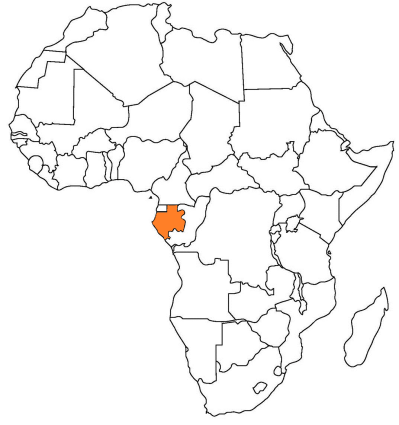
 Location: West Africa
Population: 2.3 million
Capital: Libreville
Geography: A heavily forested coastal nation on the equator
Language: French
Signature flavours: Chicken, seafood, palm nut, okra, root vegetables, leafy greens, hot peppers, pumpkin
The Menu
Eric didn’t know what to expect with Gabonese cuisine, though he expected to find some similarities to neighbouring Cameroon, once also a French colony. There weren’t many English resources online, but by looking for recipes in French, and relying on some cookbooks we have here at home, he was able to craft a menu.
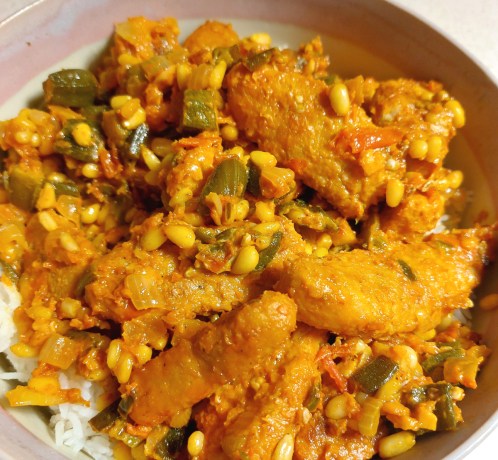
Poulet Nyembwe: Chicken and vegetables in a rich and smoky palm nut sauce.
Prep and cooking time: 30 min
Difficulty: 2/5
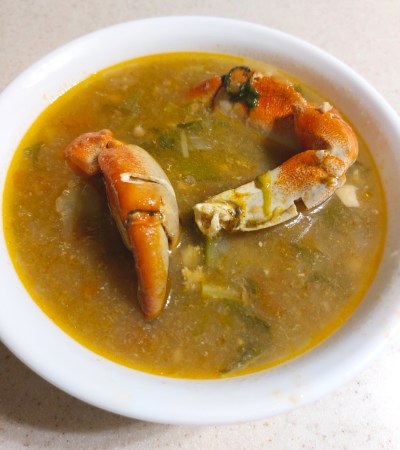
Bouillon de Capitaine: A broth loaded with chunks of juicy fish, tender shrimp, whole crab claws, and spicy mustard leaves.
Prep and cooking time: 60 min
Difficulty: 2/5
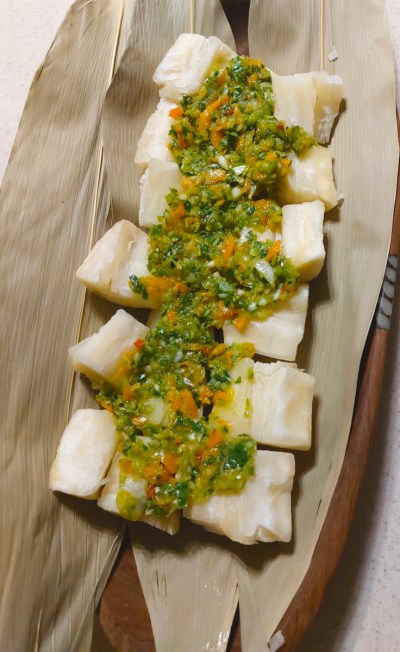
Soukoute: Boiled cassava served with a spicy sauce of bell peppers, chili peppers, garlic, parsley, onion, and oil.
Prep and cooking time: 75 min
Difficulty: 2/5
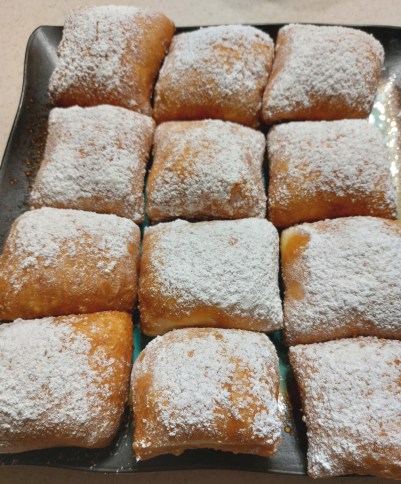
Beignets: Pillowy puffs of fried dough sprinkled with icing sugar.
Prep and cooking time: 3 hours including rising time
Difficulty: 3/5
The Shopping List
We already had palm nut oil in the cupboard from a previous assignment (a happy side effect of this blog is that the more assignments we do, the better equipped our kitchen becomes), and our nearby farmer’s market came through unexpectedly with fresh mustard greens. Eric found all his other ingredients at our local supermarket.
The Meal
Eric started the assignment by making the dough for the beignets, which needed to rise for two hours. Our kitchen is the coldest room in the house, so he put the dough in a covered bowl in the living room, out of reach of our two bread-loving cats. His other menu items were quicker to come together, and he spent the afternoon boiling, chopping, and mixing. He deep fried the beignets right before setting his table, so they were still warm when we sat down to dinner.
The smells from the kitchen were making my mouth water, and I sat down eagerly in front of the beautiful spread. We started out Gabonese feast with spoonfuls of bouillon de capitaine. The soup was incredibly flavourful and gave off some nice heat. The crab claws were a chore to break open, but the meat inside was well worth the effort.
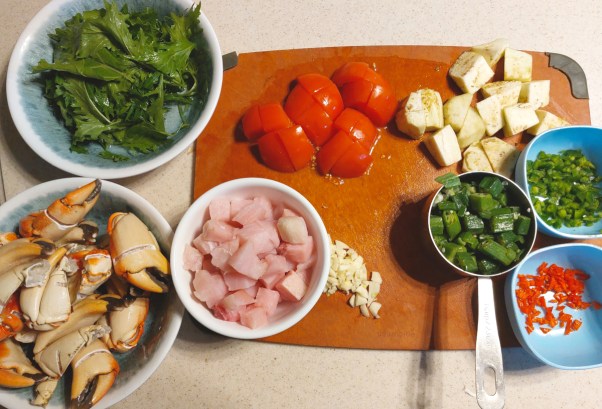
The poulet nyembwe was salty and smoky, with a distinctively rich earthiness from the palm nut oil, which gave everything a reddish tinge. Palm nut is a staple ingredient in many parts of Africa, particularly the western part of the continent, and it’s often found alongside grilled and smoked meats.
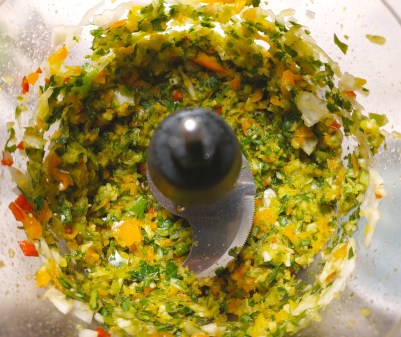
The soukoute brought a fresh, spicy zing to our palates, and I loved the cassava with its sauce, which reminded me of sauce chien from my French Caribbean assignment (and no wonder, with these two areas of the world sharing culinary roots).
We ended, of course, with the fluffy beignets. They were fried to soft and golden brown perfection. We had two each, and could have had more, but our bellies were full of the delicious foods of Gabon.
Links
https://www.elle.fr/Elle-a-Table/Recettes-de-cuisine/Beignet-africain-3605603
The World Cookbook: The Greatest recipes from Around the Globe by Jeanne Jacob and Michael Ashkenazi
Tasting the World…One Country at a Time by Nicole Jordan O’Donnell
Disclaimer: I’m not a professional chef. I’m just a passionate cook with a curiosity for flavours I’ve never tried. For great recipes from gifted local cooks, follow the links above.
 Wooden Spoon Wanderer