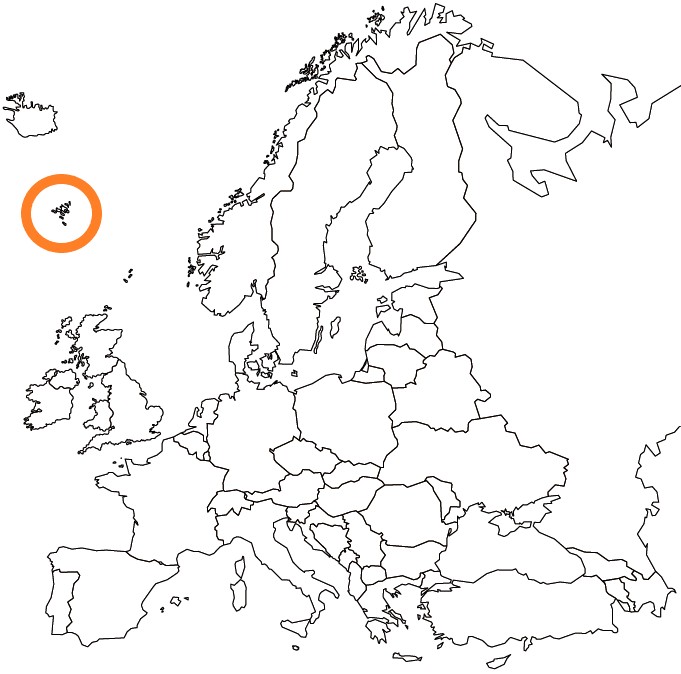
 Location: North Atlantic
Population: 54,900
Capital: Tórshavn
Geography: A rugged, rocky group of 18 larger islands and nearly 800 islets
Language: Faroese, Danish
Signature flavours: Lamb, mutton, seafood (including whale and whale blubber), sea birds, root vegetables, berries
The Menu
“There aren’t a lot of Faroese food blogs,” Eric remarked, as he trawled through online resources in an effort to build a menu. Many of the recipes he did find were going to be impossible to make — stuffed puffin and fermented pilot whale blubber just wasn’t available at our local Ontario markets.
Faroese cuisine is influenced by its Danish heritage, but is largely shaped by its remote position in the cold waters between Great Britain and Iceland.
What Eric came across in the end was a blog from the Faroe Islands tourism authority, and another site run by the Ministry of Fisheries. Both offered local recipes with ingredients he could find or at least reasonably substitute for.
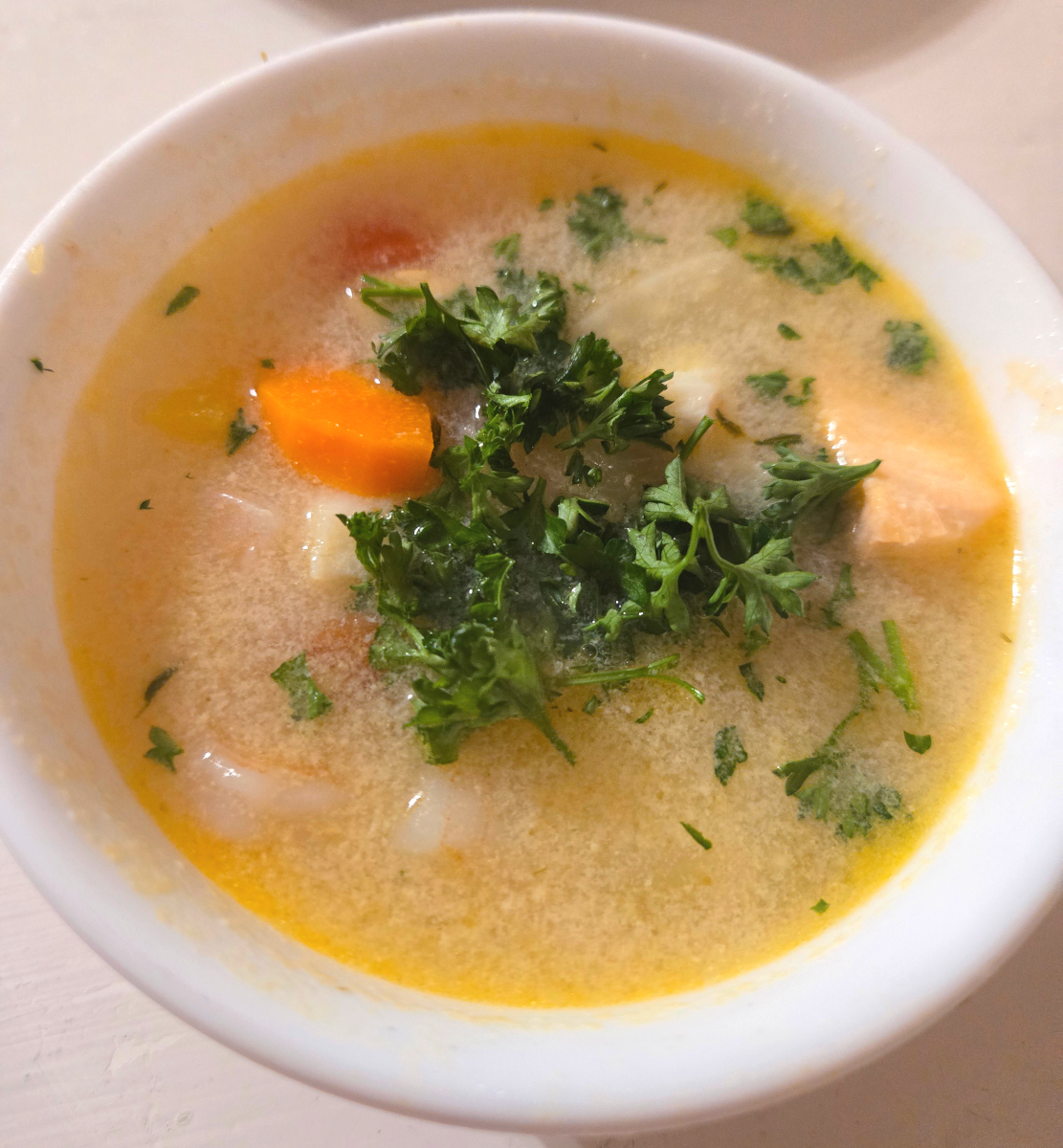
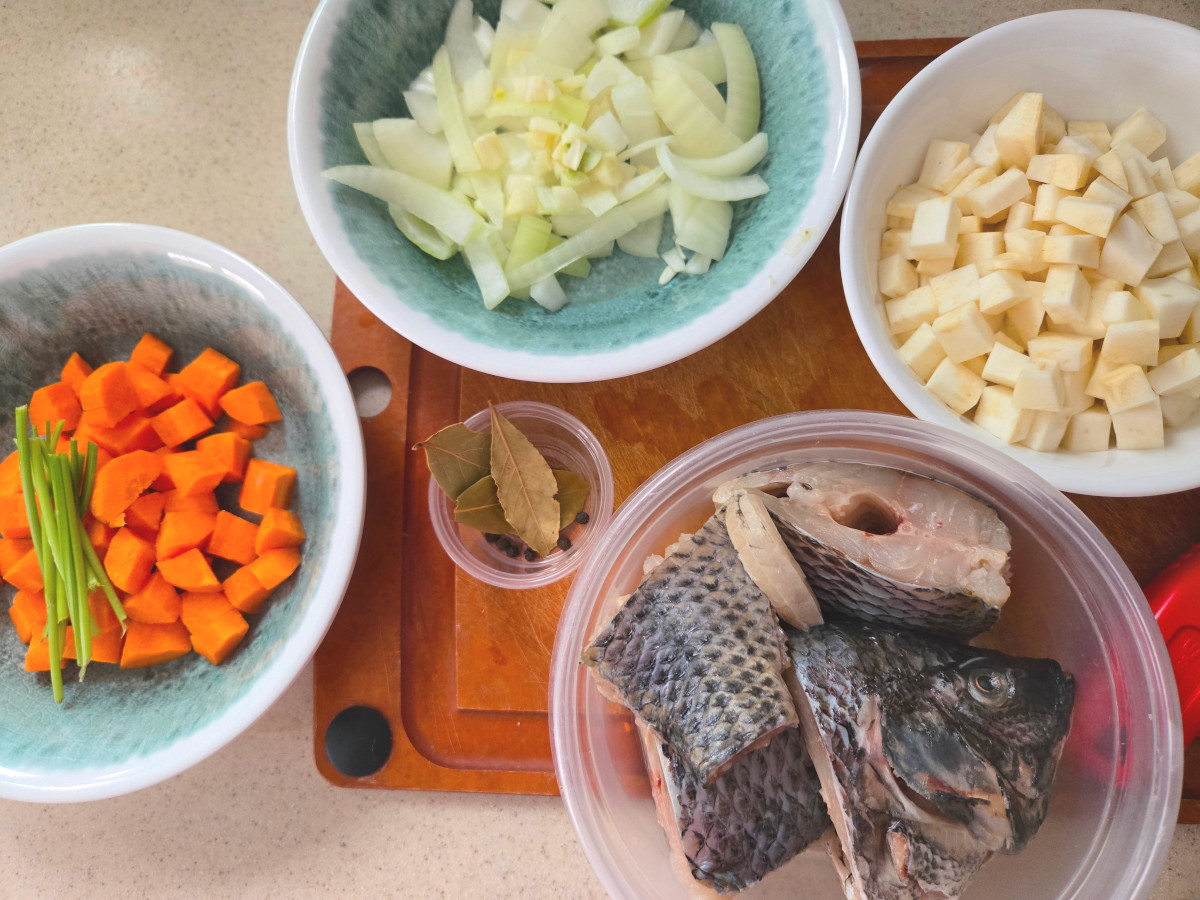
Faroese Fish Soup: A hearty soup with a fish and white wine broth, loaded with chunks of haddock and char, juicy shrimp, anchovies, fennel, carrot, onion, garlic, squash, and herbs. Eric made the stock himself from a whole tilapia, celeriac, carrot, and spices.
Prep and Cooking time: 5 hours
Difficulty: 3/5
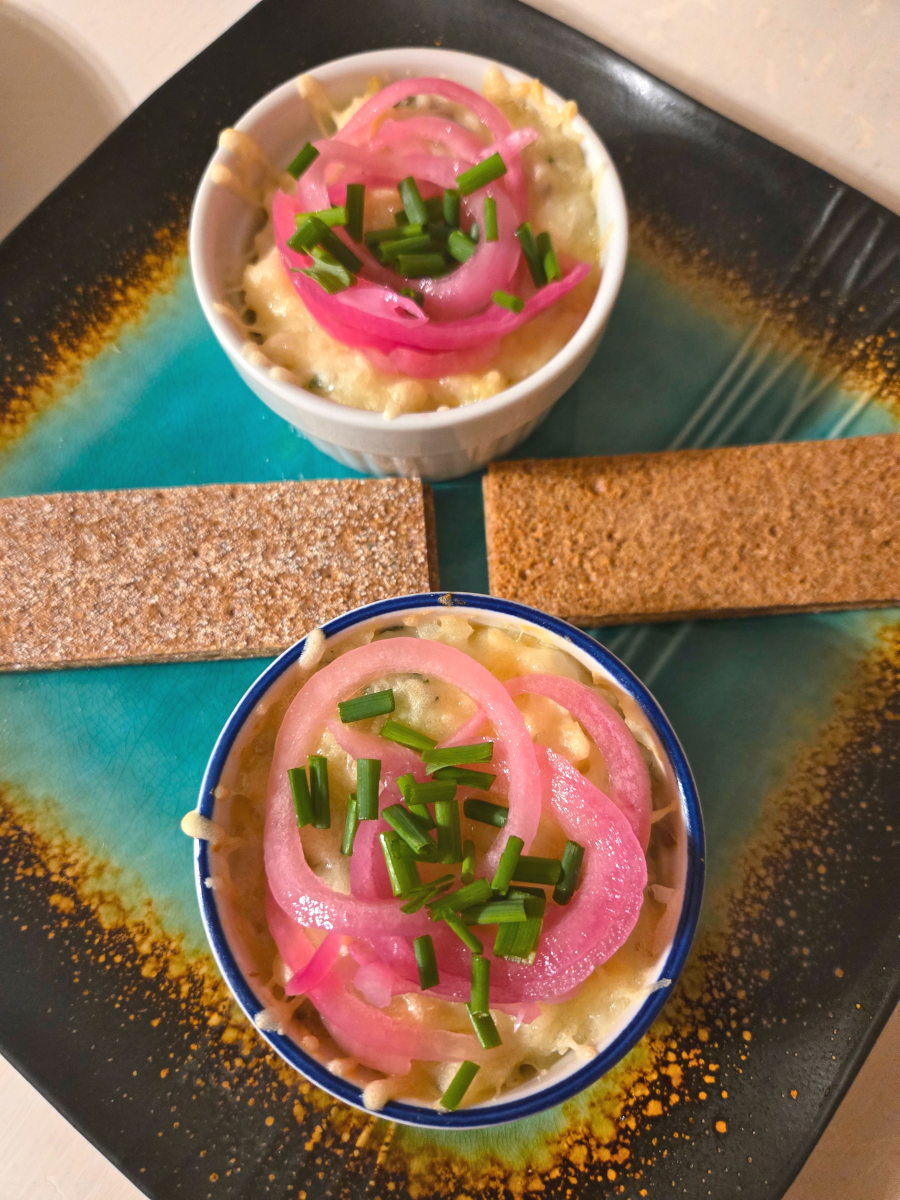
Saltfiskur Brandade: A potato- and fish-based spread topped with pickled red onions and scooped up with sourdough rye crackers.
Prep and Cooking time: 60 min (plus 24 hours to soak the salted fish)
Difficulty: 2/5
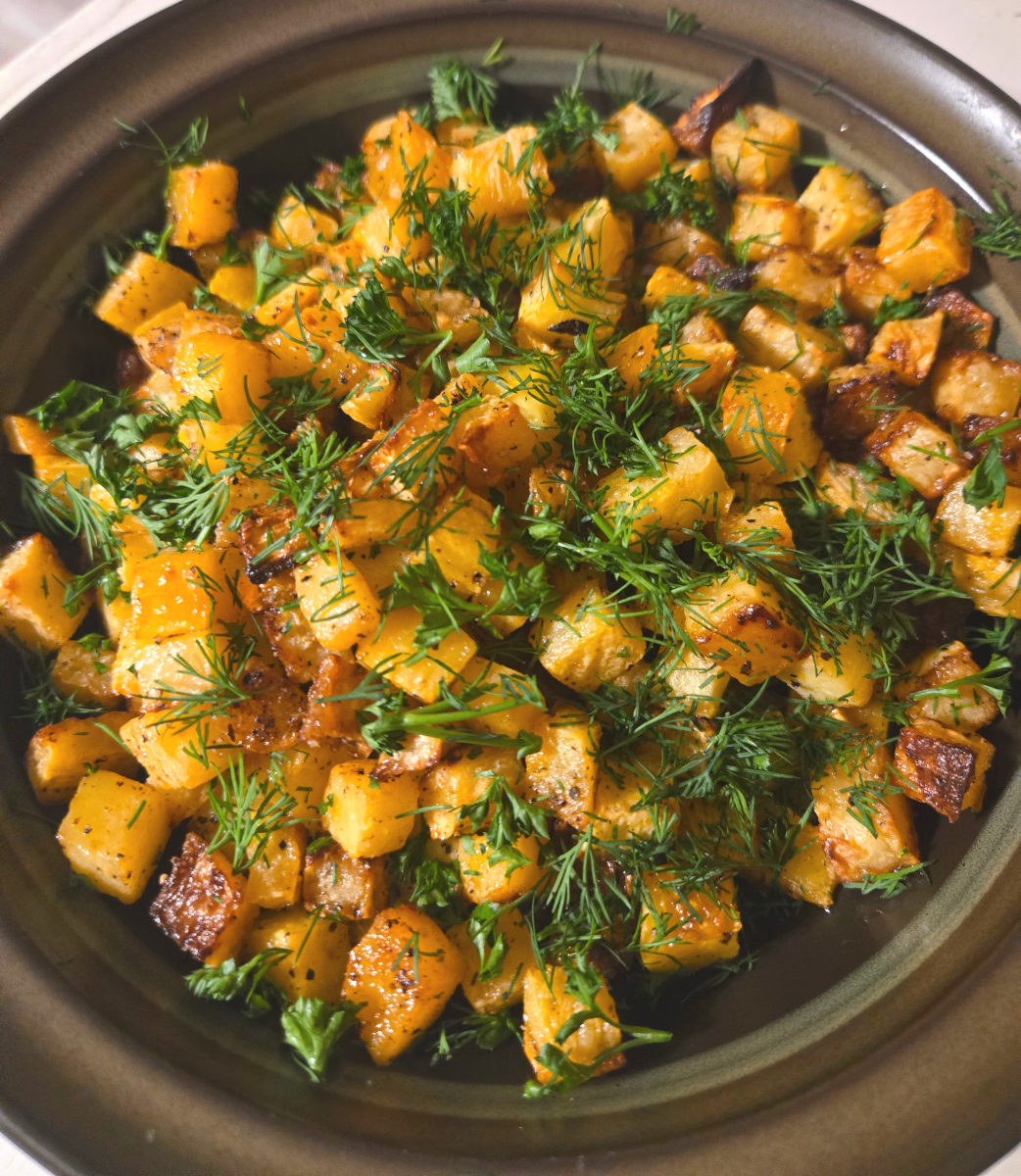
Roasted Rutabaga: Diced rutabaga, lightly oiled and sprinkled with salt and pepper, roasted until golden brown, then topped with parsley and dill.
Prep and Cooking time: 60 min
Difficulty: 1/5
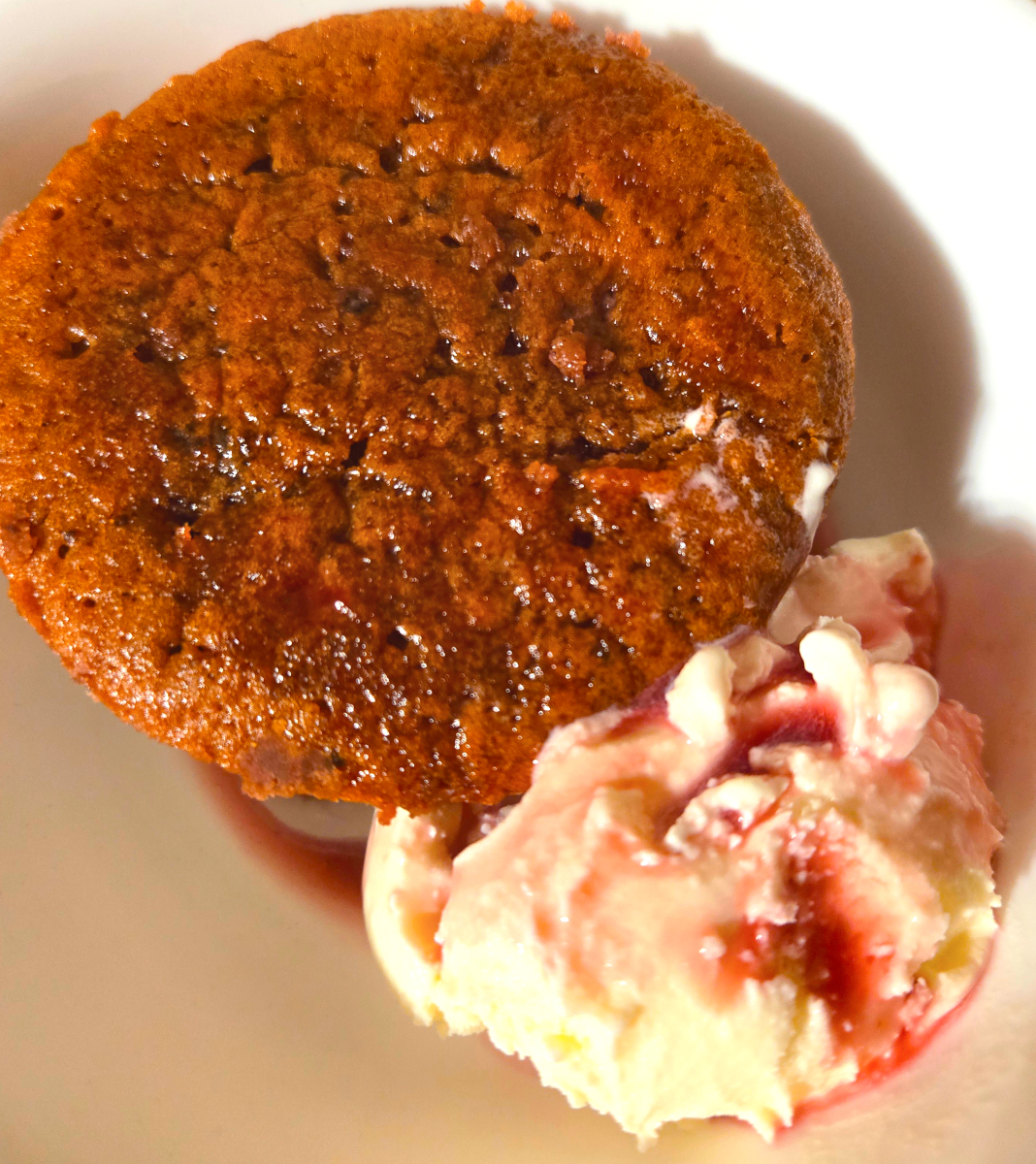
Blóðkøka (blood cake): A moist cherry cake drizzled with a cherry reduction and served with ice cream.
Prep and Cooking time: 90 min
Difficulty: 2/5
The Shopping List
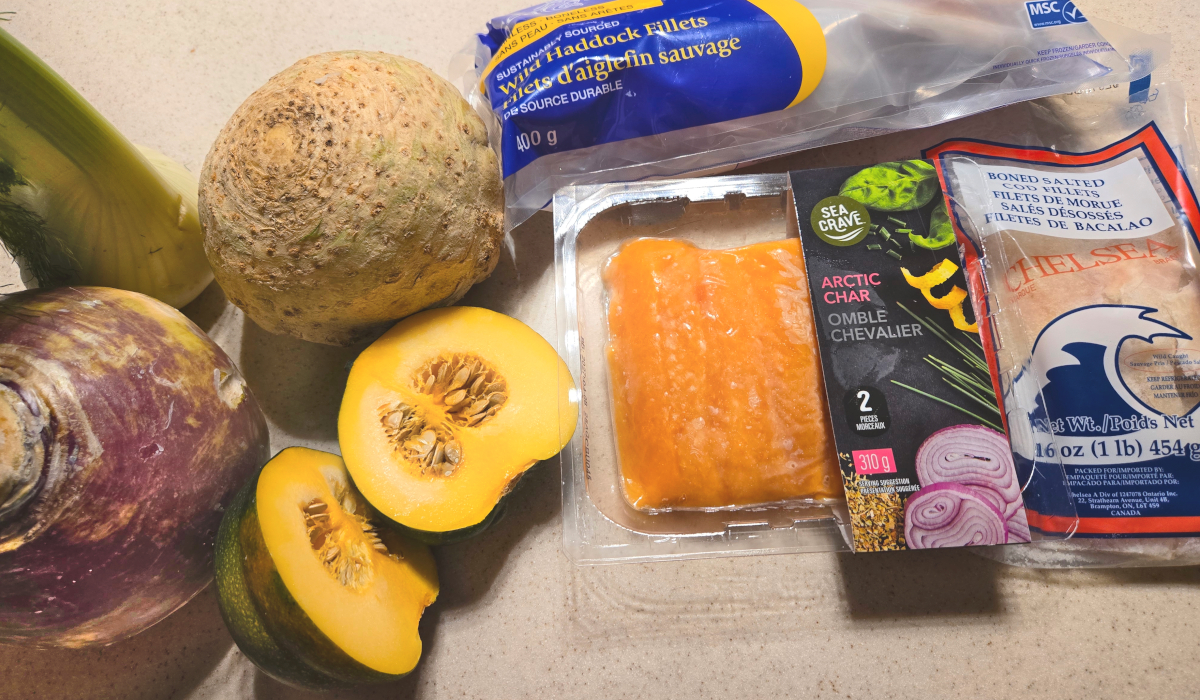
Eric knew he would find salted cod at our local market because it’s produced commonly on the east coast of Canada. Cold water Atlantic fish like haddock and Arctic char as also readily available. Our cold climate allows for fennel and rutabaga, and the squash came from our own garden.
The Meal
Everything on Eric’s table was cold climate comfort food. It went down warm and sat heavy in our bellies like we were preparing to be out on the waves fishing for the next 12 hours. It was fantastic.
The soup went down a treat as the snow fell heavily on our little house in the country (it’s only mid-December and we have a meter of snow on the ground).
The saltfiskur brandade was rich and creamy, and though Eric served it with rye crackers, I could have just eaten it with a spoon (and, okay, I did a little bit).
I don’t know that I’ve ever tried rutabaga before. Its flavour is slightly sweeter than potato and a little bitter, but not so much as parsnip. I loved the roasted rutabaga. The diced root vegetable was slightly caramelized from roasting, and tender and fluffy inside.
We ended the meal with decadent blóðkøka. Studded with juicy cherries, and drenched in cherry juice, it was sweet and indulgent.
The meal was the perfect fuel for the two hours we subsequently spent shoveling snow.
Links
https://visitfaroeislands.com/about-vfi/people-society/faroese-food/recepies/rutabaga-in-the-oven
https://visitfaroeislands.com/about-vfi/people-society/faroese-food/recepies/blood-cake
https://www.faroeseseafood.com/recipes/fish-soup-how-to-make-fish-stock
https://www.faroeseseafood.com/recipes/brandade-faroese-style
Disclaimer: I’m not a professional chef. I’m just a passionate cook with a curiosity for flavours I’ve never tried. For great recipes from gifted local cooks, follow the links above.
 Wooden Spoon Wanderer