 Location: South-Central Africa
Population: 20.2 million
Capital: Lusaka
Geography: A landlocked, tropical nation consisting mainly of high plateaus
Language: English
Signature flavours: Groundnuts, maize, freshwater fish, leafy greens, pumpkin, root vegetables
The Menu
The weather in Ontario was as un-Zambian as it gets when Eric started planning his menu at the end of February. Two meters of snow were on the ground and both of us were exhausted from shovelling and being constantly snowed in. This assignment provided a little brightness in an otherwise bleak month (okay, I’m being a little dramatic, but it was a seriously long winter). It’s taken me two and a half months to dig myself out of the snowdrifts and write this, and I’m thrilled to say I spent three hours in a blooming garden this evening, with not a snowflake in sight.

Chibwabwa: Pumpkin leaves stewed with tomato and onion (Eric used kale since pumpkin leaves are not available at our grocery stores in Canada — despite the fact that pumpkins and many varieties of squash are).
Prep and cooking time: 20 min
Difficulty: 2/5

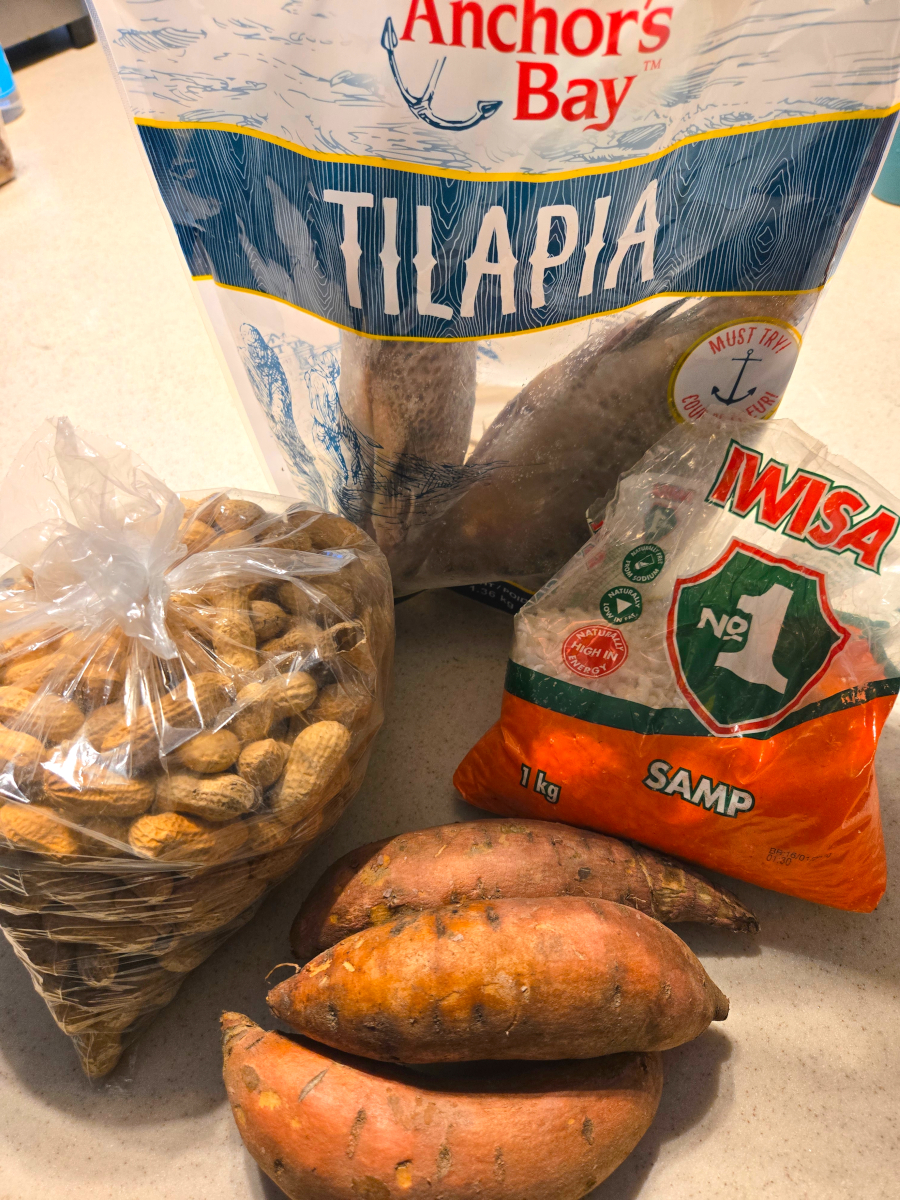
Ichiloli: A tilapia stew with onion and tomato. Tilapia is a (mostly) freshwater fish native to Africa, and landlocked Zambia has the largest tilapia industry in the region.
Prep and cooking time: 60 min
Difficulty: 3/5

Samp in Pounded Groundnuts: Samp is dried and broken white maize kernels eaten in south and eastern Africa. Groundnuts are more commonly known as peanuts in Canada. This dish consists of boiled samp mixed with groundnuts pounded into a coarse paste.
Prep and cooking time: 60 min
Difficulty: 2/5


Golabjamoun: This dessert’s name plays on the similar appearance of Indian gulab jamun but offers a distinctly Zambian flavour profile. Golabjamoun is made by first boiling yams in milk and sugar, rolling up little balls spiced with cinnamon, and finally frying them until golden brown. Eric topped his with icing sugar.
Prep and cooking time: 45 min
Difficulty: 3/5
The Shopping List
We had samp in our cupboard from a previous assignment, and everything else came from our local supermarket.
The Meal
Our Zambian feast consisted of simple fare, mostly stewed or boiled, with few ingredients. This meant that the ingredients themselves were the focus of each dish — earthy kale that soaked up the flavours of its stew; clean-tasting, almost buttery tilapia; rich, nutty samp; and sweet, hearty yam.
The recipes weren’t overly complex, and Eric didn’t need ten gadgets to prepare the food. It wasn’t a meal that knocked our socks off. Instead, it served as a culinary escape from the relentless Canadian winter — a comforting reminder of how food can transport us…even when we’re snowed in.
Links
https://mamasownmarket.com/blogs/mamasown-recipes/ichiloli-dry-fish-closed
https://mamasownmarket.com/blogs/mamasown-recipes/samp
https://varadaskitchen.blogspot.com/2014/09/golabjamoun-zambian-sweet-potato-dessert.html
Disclaimer: I’m not a professional chef. I’m just a passionate cook with a curiosity for flavours I’ve never tried. For great recipes from gifted local cooks, follow the links above.
 Wooden Spoon Wanderer
One Comment Add yours